- RegenCircle Newscast
- Posts
- The RegenCircle Newscast 12.3
The RegenCircle Newscast 12.3
Tyson retreats from unverifiable “climate-smart” beef claims. Innovations include biodegradable citronella mulch, precision-fermented palm oil, fungi for reforestation, and nitrogen-fixing microbes. Food-recovery groups like Urban Gleaners gain attention as impact-investment targets, and digital agtech expands support for smallholders.
This Week’s Human Interest Stories

Image: Ambrook
Palm Oil Without the Palm
Ambrook profiles a new wave of “no palm” fats—like NoPalm Ingredients—that use precision fermentation on agricultural sidestreams such as whey permeate instead of sugar to produce palm-like oils without tropical deforestation. By feeding yeast on low-value byproducts from mozzarella production, the company expects to produce up to 1,200 tons of oil annually at around 50% lower feedstock cost than food-grade sugars, with the process adaptable to other wastes like potato peels or brewery residues. Meanwhile, some on-the-ground palm producers are pursuing Regenerative Organic Certification using no-till, cover crops, and crop rotations, showing there are both high-tech and farm-based paths to lower-impact fats. The founder’s stance is explicit: there should be no “green premium”—buyers should choose these oils because they perform, are circular, and avoid deforestation risk at price parity.

Image: Civil Eats
Non-Profits Step in to Strengthen Local Food Security as Hunger Rises
Urban Gleaners, a Portland nonprofit, rescues surplus fresh food from grocers, farms, corporate kitchens, caterers, and events—turning what would be waste into dignified, open-choice free markets. Since 2006, the group has recovered over 13 million pounds of food and now feeds about 8,500 Oregon families each week through neighborhood distributions that feel more like small community markets than traditional food pantries. Staff carefully sort everything—rejecting spoiled items—to ensure quality while reducing stigma for visitors who are often hesitant to seek help but face rising costs and dwindling SNAP benefits.
Earth Sciences
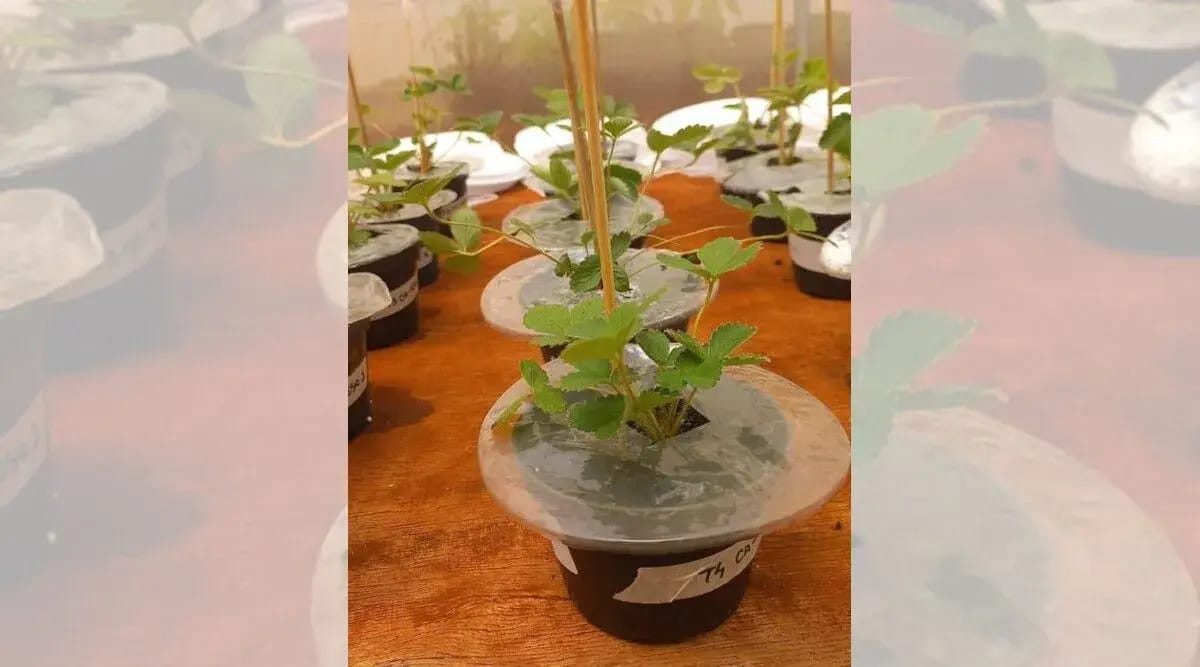
Image: Camila Gil
Citronella Mulching Film Protects Plants Without Plastics or Pesticides
Researchers have developed a biodegradable mulching film made from cellulose acetate infused with citronella oil that protects strawberry plants from silverleaf whiteflies without using polyethylene plastic or chemical pesticides. In field-style tests, strawberry plants covered with the citronella film had about six whitefly eggs after one week, compared with more than 30 eggs on plants using conventional plastic mulch or no cover at all. While the biofilm doesn’t hold soil moisture quite as well as plastic, it significantly reduces pest pressure and avoids microplastic pollution in soils, offering a promising step toward safer, circular mulching materials.

Image: NPR
Climate Tipping Points Loom Over COP30
NPR’s report ahead of COP30 highlights growing scientific alarm over climate tipping points—irreversible thresholds in systems like Amazon forests, tropical coral reefs, ice sheets, and permafrost. Scientists warn that even at today’s warming, parts of the Amazon and global coral systems show early signs of crossing thresholds where feedback loops (forest dieback, mass bleaching) lock in further damage regardless of future emissions cuts. The piece underscores that current national pledges are still insufficient to avoid multiple tipping cascades, making rapid fossil fuel phase-out and protection of high-carbon ecosystems central issues for Brazil’s COP30 leadership
Political + Policy News
 Image: ESG Dive NYC Comptroller Tells City Pensions to Drop BlackRock, Fidelity Over Weak Climate PlansNew York City Comptroller Brad Lander has recommended three city pension systems drop BlackRock, Fidelity, and PanAgora as asset managers, saying their decarbonization plans fail to meet the city’s Net Zero Implementation standards. Together, the three firms manage roughly $43 billion for the funds, with BlackRock alone overseeing about $42.3 billion; Lander argues that climate risk is a “systemic risk” to long-term returns and that managing it is a fiduciary duty. |  Image: Civil Eats Trump Rolls Back Tariffs on Coffee, Tropical Fruits, and Other FoodsCivil Eats reports that the Trump administration has rolled back tariffs on coffee, tropical fruits, and several imported foods, easing pressure on U.S. importers, roasters, and specialty grocers. While the move offers short-term relief to businesses and consumers facing high prices, critics note that broader farm and food policies still leave domestic producers exposed to volatile trade politics, without parallel support for diversified local production |
REPORTS WORTH READING

Image: Farmdoc Daily
Farmer Demonstration Networks Accelerate Conservation Adoption
A new Farmdoc Daily analysis of a large demonstration-farm network finds that cover crop adoption rose significantly not just on demo farms but across their surrounding regions. Overall adoption in the region increased by about 0.6 percentage points—roughly a 10% jump from a 6.3% baseline—after the program launched, and parcels within 5 km of a demo farm were 0.8 percentage points (13%) more likely to have cover crops. Adoption also rose with the number of demo farms in a region and was strongest four or more years after launch, suggesting that time, density, and trusted farmer networks are powerful multipliers for conservation. The authors urge policymakers to lean into peer-led networks—not just payments—to scale soil health practices more effectively and cost-efficiently.

Photo By: Peter Menzel
Marion Nestle on How to Think About What to Eat in 2025
Nutrition scholar Marion Nestle distills decades of research into a simple frame for 2025: eat more minimally processed plant foods, less meat and ultra-processed products, and pay attention to corporate power behind the food supply. She emphasizes that most diet-related disease is driven not by individual failure but by an environment saturated with cheap ultra-processed foods aggressively marketed to consumers. Nestle argues that truly healthy eating is inseparable from policy—labeling, marketing rules, SNAP design, and farm subsidies—and urges readers to see their food choices and political choices as intertwined.
Investment News
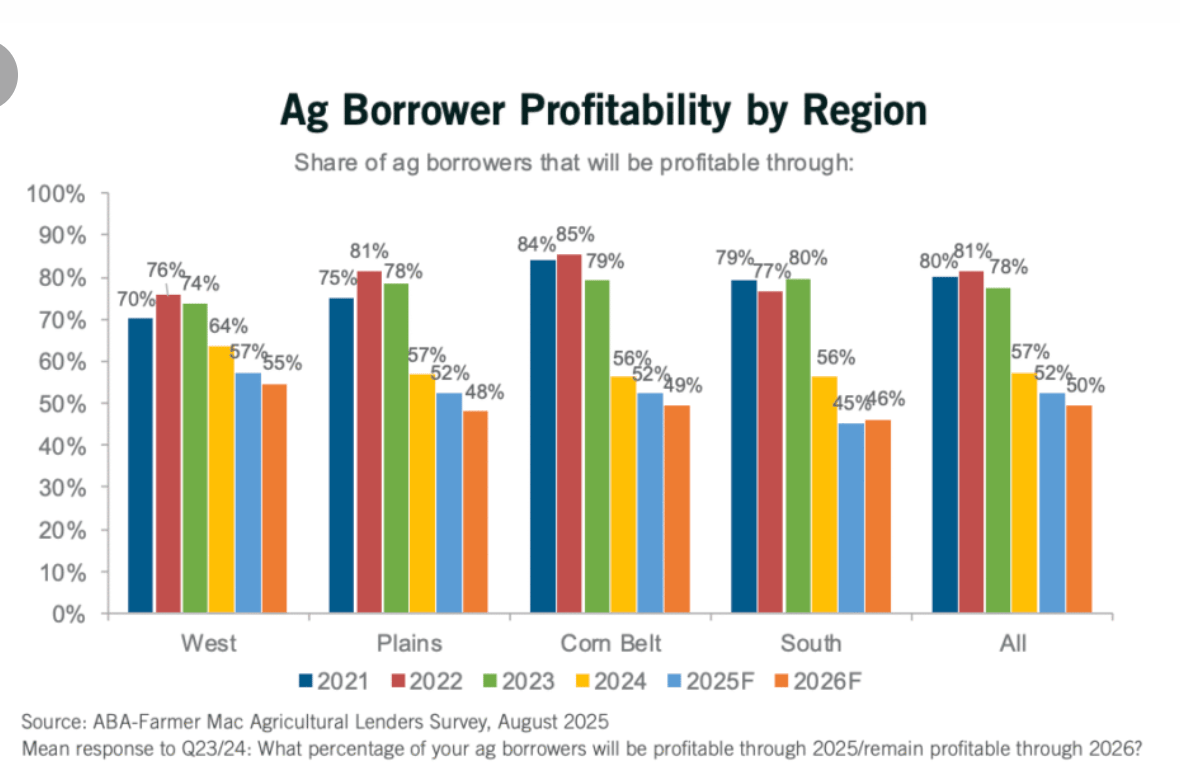
Farm Profitability Squeezed: Only Half of U.S. Borrowers Expected to Be in the Black
Ag lenders surveyed in the 2025 ABA/Farmer Mac Agricultural Lender Survey expect only 52% of U.S. farm borrowers to be profitable this year, with profitability projected to drop below 50% in 2026—the lowest share since 2020. Ninety‑three percent of lenders expect farm debt to rise over the next year, as soft commodity prices, high input and interest costs, and shrinking working capital tighten margins, especially for corn, soybean, and cotton producers, while many cattle operations remain relatively stable on strong protein demand and improved feed costs.

Agtech VCs: Stop Competing Over Crumbs, Start Building the Category
In a widely shared essay, agtech investor Sarah Nolet argues that while agriculture is a $3 trillion industry facing existential pressures—from climate volatility and labor shortages to nutrition-related disease—LPs are walking away from agtech because the asset class looks immature and fragmented. With exits scarce and capital drying up, too many funds are “competing over crumbs,” emphasizing vanity metrics like deal count, celebrity advisors, and media buzz instead of whether startups solve real farmer problems across harsh, variable conditions. Nolet calls for VCs to collaborate on standards, share learning, and align on what “good” looks like—treating different fund models (software, hardware, biotech, climate tools) as complementary tools in a shared toolbox rather than rival ideologies, so LPs can evaluate managers on substance, not narrative.
TECH

Image: iGrow News
Rhizocore Raises £4.5M to Scale Fungi-Powered Tree Growth
UK-based Rhizocore Technologies has secured £4.5 million to expand its ectomycorrhizal (ECM) fungi products, which inoculate tree roots with locally adapted fungal partners to boost survival and growth in new forests. Drawing on one of the world’s largest living fungal libraries, the company matches strains to specific sites, improving early nutrient and water uptake and reducing costly replanting failures—a major issue in large-scale reforestation. The round, led by The First Thirty with backing from Scottish Enterprise and the Grosvenor Estate, reflects a broader shift toward soil biology as both a climate solution and an investable asset class.
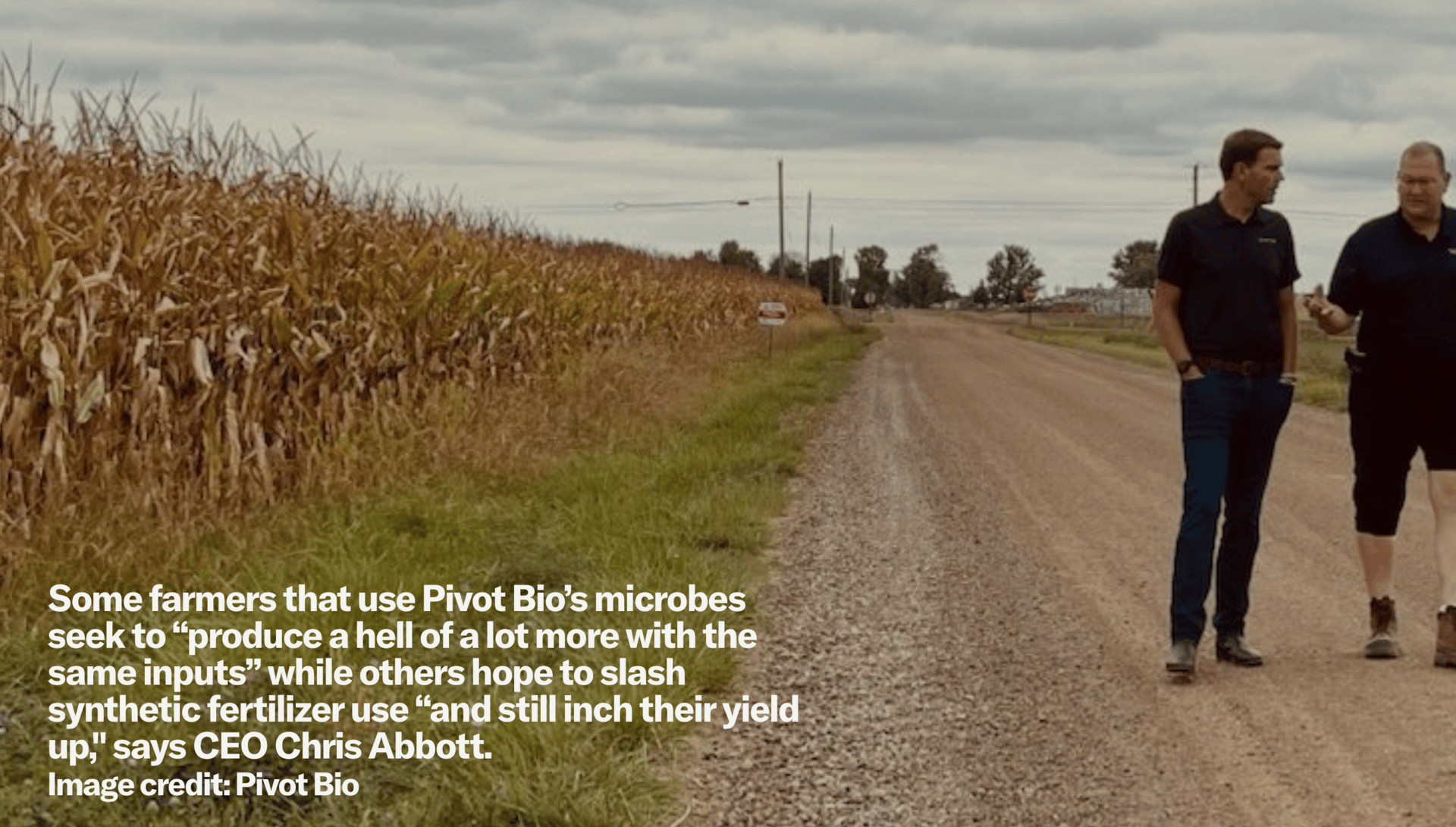
Photo by AFN
Pivot Bio Bets Microbes Can Supply Up to Half a Crop’s Nitrogen
Pivot Bio is rapidly scaling gene-edited soil microbes that fix atmospheric nitrogen directly onto crop roots, positioning them as “microscopic fertilizer factories” that can replace a growing share of synthetic nitrogen. In 2024 field trials across eight U.S. states, its CERT-N product replaced about 20% of farmers’ usual nitrogen program in cotton, delivering an average 50-pound-per-acre lint yield gain and boosting ROI by roughly $35 per acre. CEO Chris Abbott says the microbes currently can supply about 20–25% of a crop’s nitrogen needs, with an ambition to reach 40–50% within five growing seasons—potentially allowing farmers to drop volatile, loss-prone inputs like anhydrous ammonia while cutting emissions and runoff.
CONSUMER PRODUCTS
Photo by Tyson
Tyson Drops “Climate-Smart” Beef Claims After Greenwashing Suit
Tyson Foods has agreed to stop marketing “climate-smart” beef and will no longer claim it can reach net-zero emissions by 2050 as part of a legal settlement with the Environmental Working Group. For at least five years, Tyson cannot use climate-friendly branding on its beef or introduce new environmental claims unless they’re backed by experts, mirroring a similar rollback by JBS after a separate lawsuit. Environmental advocates argue there is no existing technology that makes industrial beef genuinely “net-zero,” as methane from cow burps and manure accounts for about 3% of U.S. greenhouse gases and roughly 85% of Tyson’s own footprint, which exceeds the emissions of some entire countries.

Disconnected: Non-UPF Verified Unveils Research at the Core of Their New Standard
The Non‑UPF Research Report (Oct 2025) finds that U.S. shoppers are increasingly worried about ultra‑processed foods, but lack the tools, information, and trust they need to consistently avoid them. In a June 2025 survey of 1,003 adults, 72% said they are trying to avoid UPFs, and “how processed the item is” has become the single fastest‑rising factor in their food decisions—ranking ahead of organic, non‑GMO, “clean label,” and regenerative attributes over the past decade. At the same time, most people are unsure how to define or identify ultra‑processed foods beyond long ingredient lists and “things you wouldn’t have in a household pantry,” and they perceive real structural barriers like cost, access, time, and a food environment saturated with UPFs. Around 8 in 10 shoppers agree that highly processed foods are a significant threat to public health and that food quality directly impacts long‑term health, yet they distrust food companies as messengers—creating a “trust gap” that the report argues must be filled by independent standards, clearer labeling (such as Non‑UPF verification), and education that reconnects processing level, sustainability, and personal and community wellness.
World News
 Photo: Food Tank COP30 and Regenerative Ag: Movement PerspectiveA COP30 explainer circulating in the Regenerative Ag community lays out why this year’s UN climate talks in Brazil matter for land use: negotiations are expected to focus heavily on forests, food systems, and nature-based solutions. The post urges regenerative practitioners to track how final texts treat soil carbon, agroecology, and finance for smallholder transitions, warning that vague “nature-based” language can be co-opted by offset schemes that don’t transform underlying production. |  Photo: AgroStar AgroStar Expands Digital Advisory for SmallholdersAgroStar, a leading Indian agtech platform, is scaling its digital advisory, input delivery, and market-linkage services to millions of smallholder farmers, backed by new investment to deepen its data and agronomy tools. By combining soil, weather, and crop data with call-center and app-based advice, the company aims to boost yields, reduce wasteful input use, and connect farmers more directly to buyers in a volatile climate and price environment. |
JOB BOARD - NEEDS REWORK
Sourcing Manager Linc Foods, Hybrid/Remote
Farm Share Manager Vines Gardens, Binghampton NYC
School and Community Garden Educator Child Nutrition Services, Oxnard, CA
Farmer Hotline Manager Farm Aid Remote
Marketing Manager Fresh Food Connect - Remote
UPCOMING EVENTS
Agricultural and Natural Resources Income Tax Issues Webinar.
December 15th from 8:45am to 3:30pm
Opportunity to try out new AI tool for grazing + crop planning.
Can build rotational grazing plans using satellite NDVI + your her history and generate one-season crop plans and more
Register for the 2026 Soil Health Webinar Series!
Thursdays each month from January-April!
This is a community-run platform. If you have an organization supporting the regenerative agriculture movement and would like to see your news shared on our platform, send an email to [email protected].
