- RegenCircle Newscast
- Posts
- The RegenCircle Newscast 2.6.26
The RegenCircle Newscast 2.6.26
Culture as the missing sustainability link 🌀 Pro Industry means Anti-Human 🏭 and What Happens When We Capitalize Nature 🏛️. This is your bi-weekly curation of everything you need to know happening in the world of regeneration.
Letter from the Editor 🖋️When Systems Fail Us Delivering on an overdue promise to you all I finally got around to my Abundance book review. This essay takes a look at the larger systems failure we are in the midst of and how we can use healthy restraints and regional design frameworks to build our own systems of abundance. | 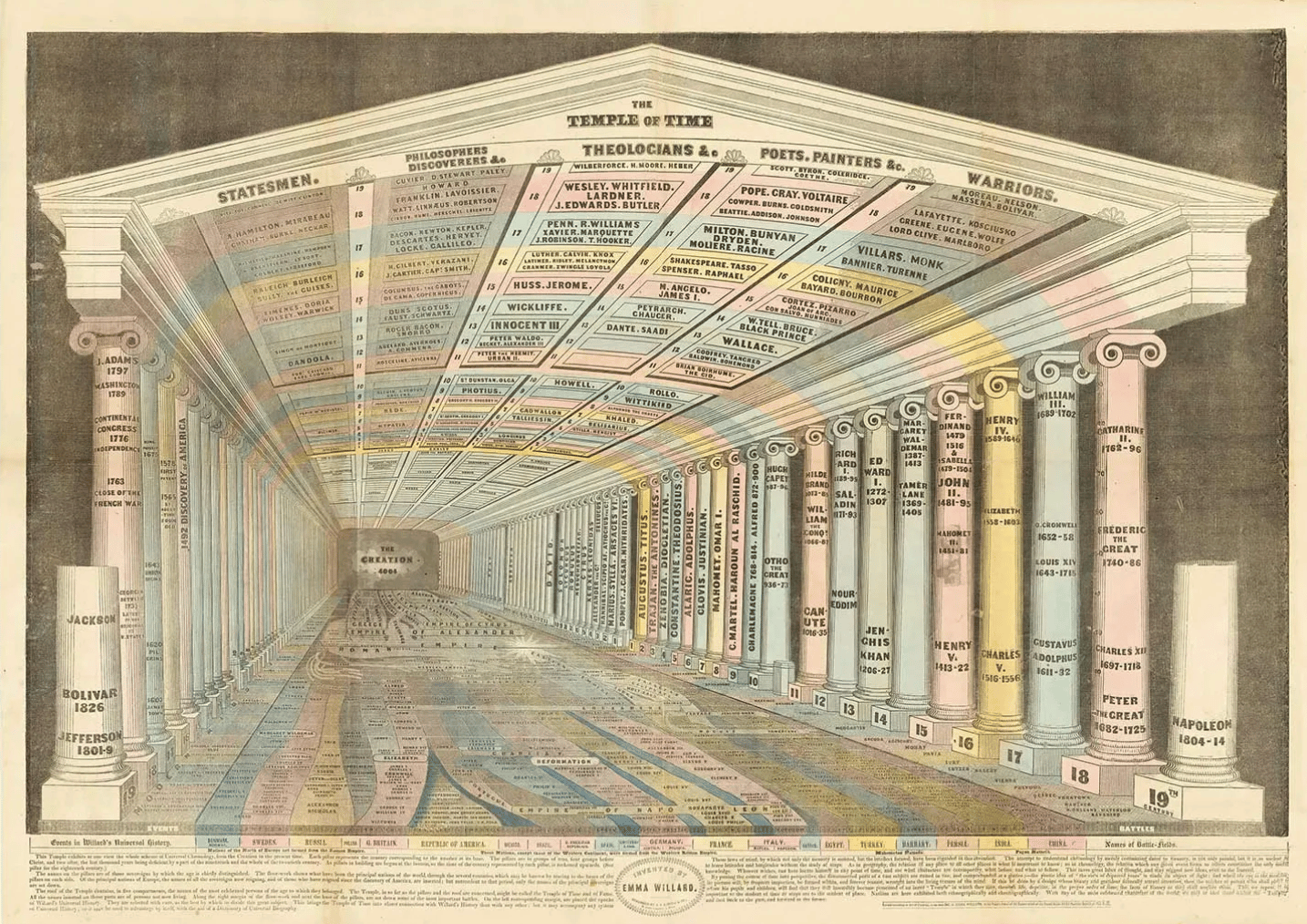 Illustration by Emma Willard, The Temple of Time, 1846 |
I’ve taken a bit of a different approach to the newsletter this week, and wrote a short op-ed for each topic that captivated me this week. I would love your feedback on this format!
This Week’s Human Interest Stories
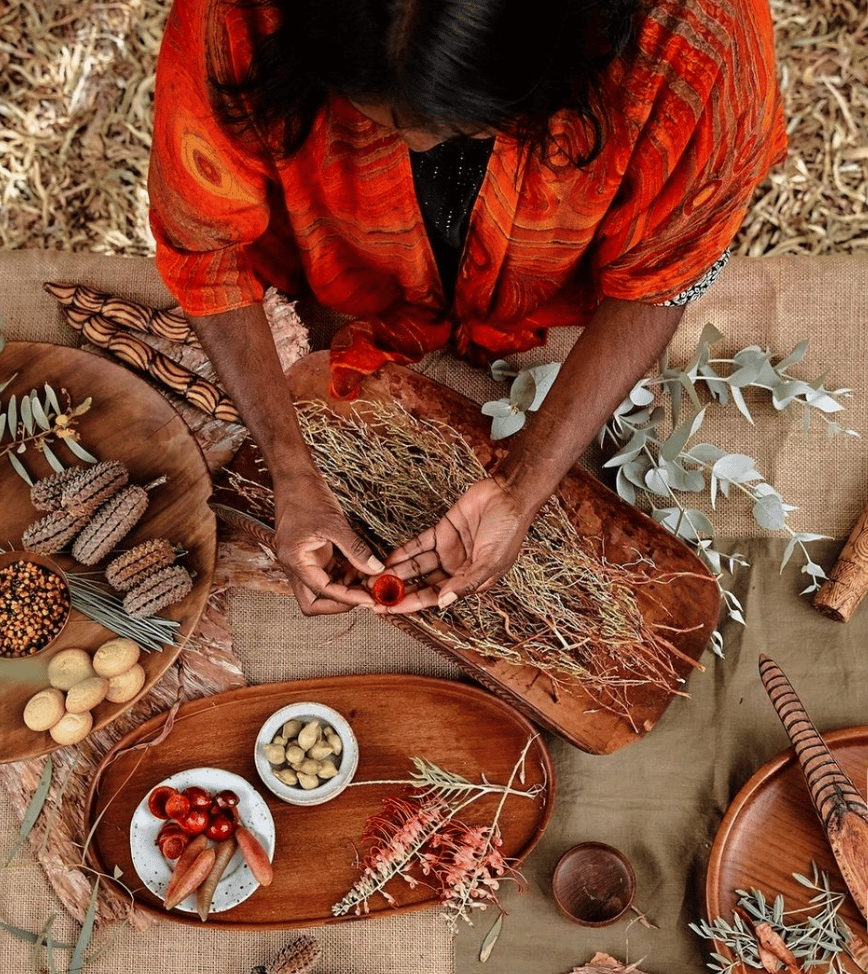
Image Credit: Melbourne Bush Food
For the Culture
Technological advancements in farming are what drives the majority of investment, in 2025 AgFunder reported about $6 billion in investment in the sector up 14% and this is only accelerating as AI takes over, however we are increasingly being shown that it is not technology driving our sustainability goals, it is culture. A new Nature article explains that when food and farming are embedded and forwarded through culture they become art and therefore a requisite for well being. This is why 80% of the worlds biodiversity is stewarded by indigenous communities, their identity is rooted in food sovereignty and their relationship to nature. Even today we see that warfare is targeting the elimination of indigenous seed saving because eliminating food sovereignty is the easiest way to control a population. Which is why now more than ever we must heed the words of Wendell Berry that ‘eating is an agricultural act’ and in these modern times is also a political act.
Political News
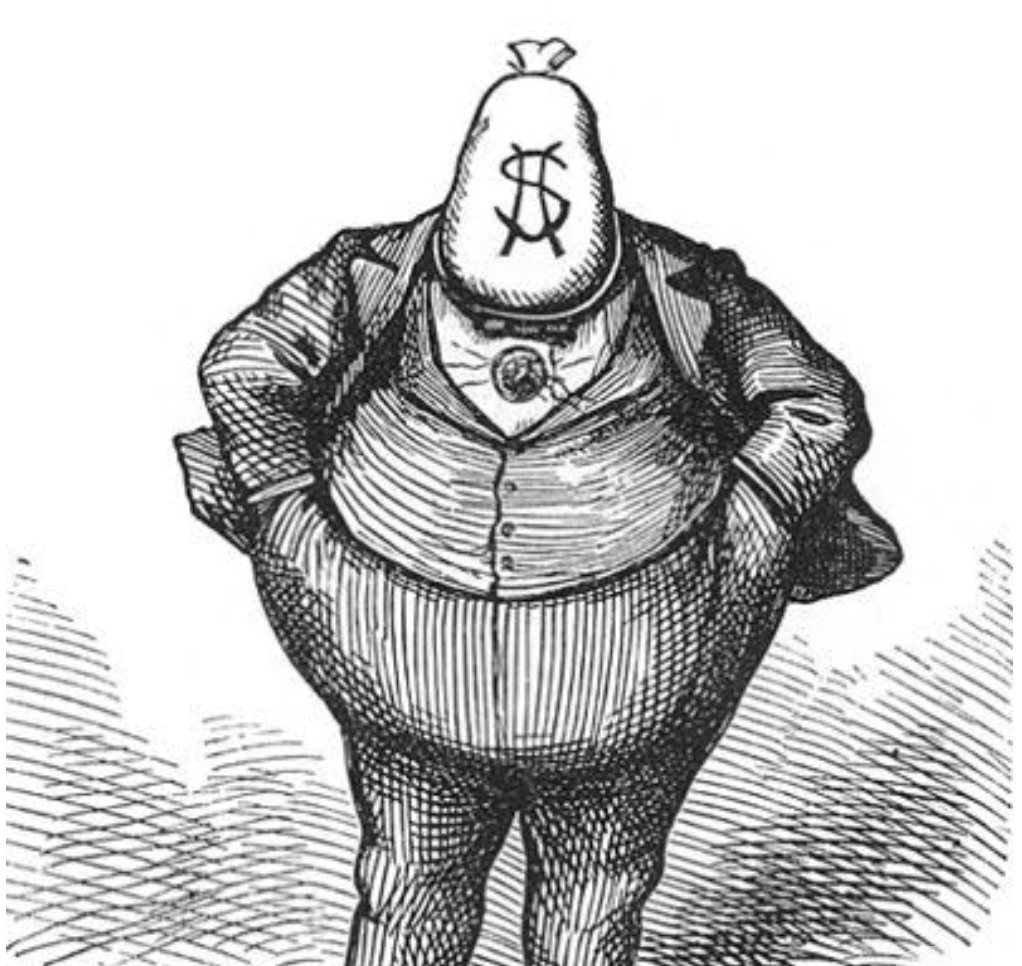
Pro Industry Means Anti Human
We have been watching the rapid slid to extreme pro-industry policies since Trumps inauguration, however the truth is we have been moving in this direction for some time. A clip of George W Bush in 2011 really drove this home for me, conservatives 15 years ago are not what conservatism have become today. With international cooperation down, as illustrated by the US withdrawing from WHO and once again the Paris Climate Accord, and international industry overreach up as is evident by intervention in Venezuela’s oil markets, there can be no reasonable argument that any of these actions are for ‘the people’. They are on behalf of industry, an industry sector that wants to keep us consuming - at all costs. We can trace this back to many factors but one decision was the moment the Supreme court ruled that money in politics is not corruption, but constitutionally protected speech.
The biggest question to ask in today’s political theatre is: what does a future that values industry above humans look like? And when government abandons human needs for industry needs, how do we ensure our own survival, let alone flourishing?
Investment News
What Happens When We Capitalize Nature
Since the 18th century we have been extracting from nature for capital, but what happens when we create a marketplace for natural capital?
Many women I admire fiercely are against creating capital markets for nature - expanding on carbon markets to create biodiversity, water markets etc. However most of the financial institutions (largely run by men) I have encountered in the space see it as the only way forward. This UN piece illustrates exactly why the divide between men and women is so vast when it comes to ecological issues.
But the Natural Capital Markets debate really goes to the heart of how we as a species will move forward in relationship to money and our environments. To create an asset class for nature insinuates that it is tradable and disposable - like money. It is much harder to create an asset class which is non-substitutable and non-reproducible, which is what nature is.
My greatest question here, is there a way in which we can capitalize nature without inherently devaluing it? Is there a future in which market development enhances natural abundance over delivering profit?
CONSUMER PRODUCTS
Trust with a Capital T
If you were not hiding under a rock for the last month you would have seen the Vital Farms egg scandal that opened up a realization for consumers - pasture raised actually means corn and soy fed. The bigger story for me is that our food system and subsidies are set up such that a scaled business cannot in fact be a regenerative one. I might get a lot of hate for this because the desire to make oodles of money off of regeneration is strong, however the fact of the matter is that a company of Vital Farms scale likely cant source anything but corn and soy feed for their hens. For them to source another type of food would take a much larger revolution in our food and political system. I am not letting them off of the hook, their marketing tactics are deceptive and they are owned by some of the largest hedge funds in the world profiting off of deception and greed. I am however pointing out that Trust in the consumer products landscape is getting harder and harder to come by.
JOB BOARD
UPCOMING EVENTS & GRANTS
Indiana’s Horticulture and Small Farm Conference, March 3-5
Colorado Grain Summit in Salida March 2
This is a community-run platform. If you have an organization supporting the regenerative agriculture movement and would like to see your news shared on our platform, send an email to [email protected].
